Why the Zip Position Changes the Whole Tracksuit Look
Quick Answer: Where the zip stops sets the shape of the opening at your neckline, and that shape is what your eye reads first. Zipped high creates a closed column and a wider-looking upper body; stopped at mid-chest creates a V that lengthens the neck; fully open turns the jacket into a layering piece and shifts the focus to what is underneath. Three positions, three different outfits. Decide the position rather than defaulting to it.
You already own three looks.
They are separated by about six inches of zip.
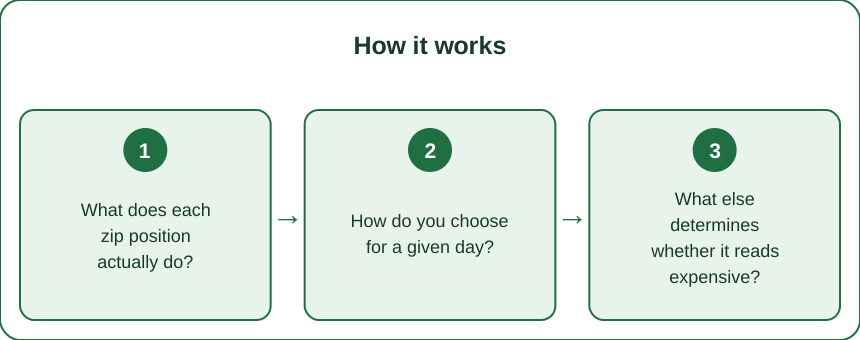
What does each zip position actually do?
Four positions, each producing a different proportion.
Fully zipped creates a closed column. No neckline shape, no vertical line, and the jacket’s colour block reads as a single mass. This is the most athletic and the most shortening of the options, and it is the default most people wear without choosing it.
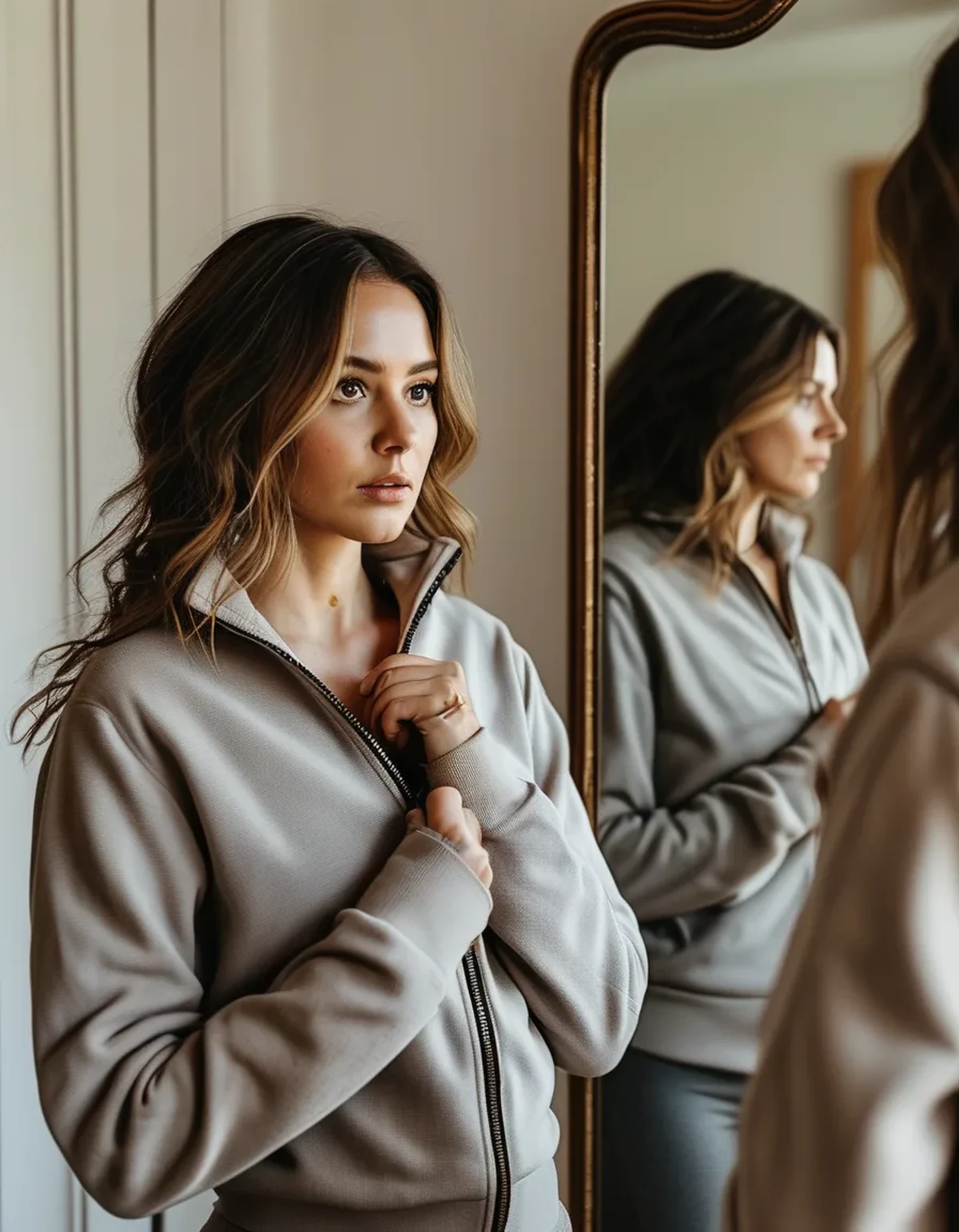
Zipped to the collarbone gives a small V. Enough of an opening to break up the block, and it works well with a visible collar or a fine chain. This is the safe polished option and the one that works in the widest range of settings.
Stopped at mid-chest gives a long V. The strongest lengthening effect on the neck and upper body, and it shows whatever is underneath. This is where a tracksuit starts looking deliberate rather than functional.
Fully open turns it into an overshirt. The jacket becomes a frame for the outfit beneath, and two vertical lines run the full length of your torso. This is the most versatile and the least sporty, and it is how a tracksuit gets worn outside a gym context.
And a quarter-zip is a fixed version of the second option. Which is why quarter-zips are so easy to wear - the decision was made for you at a flattering position.
The collar behaves differently at each. A funnel collar zipped high frames the face; the same collar half-open flops. Check what the collar does before committing to a position, because some collars only work in one.
How do you choose for a given day?
By the layer underneath, the setting, and the proportion you want.
Choose by what is underneath first. A plain white t-shirt looks good in the long V; a busy print looks better mostly covered. The opening is a window, and you decide what shows through it.
Higher for cold, lower for warm. Obvious and worth stating, because temperature usually decides it by default and then nobody revisits it once indoors. Adjust when you get inside.
Lower for a longer neck. If you want a lengthening effect, mid-chest is the position. A high zip with a high collar shortens the neck visibly, which suits some people and not others.
Fully open when the jacket is the layer, not the outfit. Over a dress, over a fitted top with jeans, over anything you want to be the focus. The open jacket is a styling frame, and it is by far the most versatile use of a track top.
Match the position to the bottom half. A matching set fully zipped reads as one deliberate outfit; the same set with the jacket open reads as separates. Both are valid and they are not the same look.
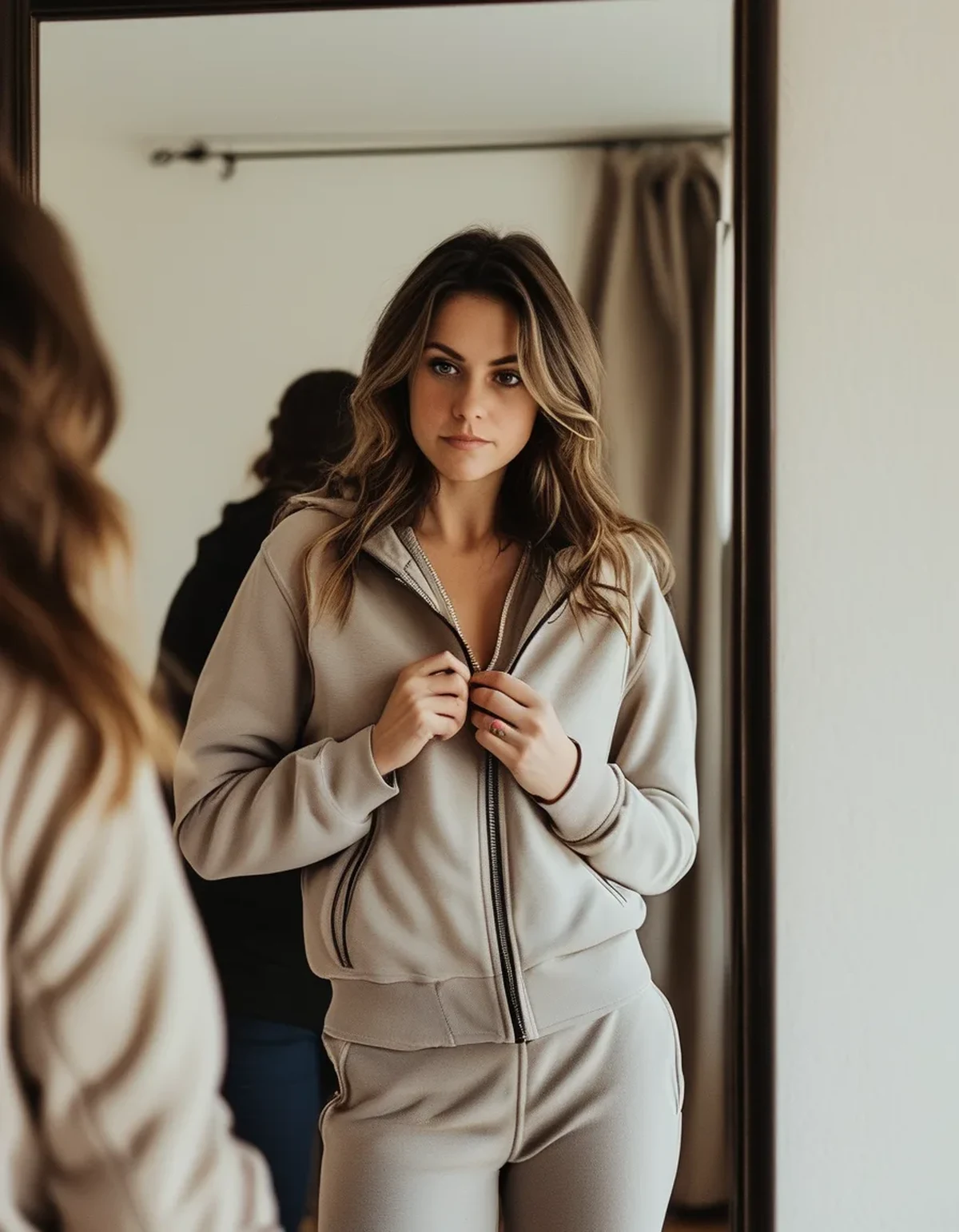
And check it in a mirror at full length. The zip position looks different at head-and-shoulders than at full body. Most people check the wrong mirror and are surprised by photographs.
What else determines whether it reads expensive?
Four things that matter more than price, and one that people over-weight.
Fabric weight and drape. A heavier fabric that hangs cleanly reads as considered; a thin shiny one reads as sportswear regardless of what you paid. Weight is the strongest single signal of quality in a track top.
The zip hardware itself. A metal pull, a smooth action, and a zip that lies flat rather than rippling. A rippled zip line is the clearest sign of a cheap jacket, and it is visible from across a room.
Where the sleeve ends. At the wrist bone, not over the hand and not above it. Sleeve length is the detail people notice without registering, and it is easily fixed by a tailor.
Fit through the shoulder. The shoulder seam should sit at the point of your shoulder, or deliberately dropped - not somewhere in between. A seam halfway down your upper arm by accident is what makes a jacket look borrowed.
And one deliberately non-athletic element. Real shoes, a structured bag, or proper jewellery. One anchor is enough, and it changes the register of the whole outfit.
Price is the thing people over-weight. An inexpensive tracksuit in a heavier fabric with a flat zip and correct sleeve length outperforms an expensive thin one every time.
5 Mistakes Everyone Makes With Track Jackets
Defaulting to fully zipped. It is the most shortening position and it is what everyone wears without deciding. Try mid-chest once and check a full-length mirror.
Wearing a collar that only works closed, half-open. Some funnel and stand collars collapse the moment the zip comes down. Learn which of yours does what, and stop fighting the one that does not cooperate.
Ignoring the sleeve length. Sleeves over the hand make any jacket look oversized in the wrong way. Cuffs at the wrist bone, or pushed up deliberately.
Matching set plus trainers plus backpack. Three sportswear signals in one outfit reads as gym kit, whatever the quality. Swap one element - shoes or bag - and the whole thing changes.
Buying for the fabric feel rather than the drape. Soft feels lovely in a shop and thin drapes badly on a body. Hold it up and look at how it hangs, which is what you will actually see.
And the bonus mistake: never adjusting it after you put it on. The zip position that suited the cold walk in is not the one that suits the warm room. It takes two seconds and it is the entire point.
FAQ: Track Jacket Styling, Answered
Does the zip position really make that much difference?
More than almost any other single adjustment available without changing clothes. The neckline shape is the first thing the eye reads, and the zip is the only control you have over it.
What should I wear under an open track jacket?
Something fitted and plain - a fine knit, a good t-shirt, or a bodysuit. The jacket frames it, so the underneath layer is doing the visual work and busy patterns compete with the jacket’s own lines.
Is a matching set harder to wear than separates?
Not harder, just more committed. A matching set reads as one deliberate outfit, which works beautifully with one non-athletic anchor and reads as loungewear without one.
TL;DR:
- Fully zipped is a closed column and the most shortening position - and it is everyone’s default.
- Mid-chest gives a long V that lengthens the neck and makes the outfit look deliberate.
- Fully open turns the jacket into a layering frame and is the most versatile option.
- Fabric weight and a flat-lying zip signal quality far more than price does.
- One non-athletic anchor - real shoes or a structured bag - changes the whole register.
Try your usual jacket at mid-chest in a full-length mirror today. It is the same jacket and a different outfit.
Keep Reading
This article is for general informational and styling purposes only. Fit, sizing, and product availability may vary.