Why a Tracksuit Looks Sharp in One Fabric and Scruffy in Another
Quick Answer: What separates a sharp matching set from a scruffy one is fabric structure: weight, surface finish and drape. Fabric with body holds a clean line and reads deliberate; thin, fuzzy or high-sheen fabric collapses and reads like loungewear. Look for heavier weight, a matte or slightly textured surface, and a fabric that hangs rather than clings.
Same cut.
Same colour.
One looks considered, one looks like you gave up. It is almost entirely the fabric.

What makes fabric read sharp or scruffy?
Six properties, and only one of them is usually stated on the label.
Weight is the biggest single factor. Heavier fabric holds its shape and hangs in clean lines. Lightweight jersey collapses, clings and shows every underlying lump. For a matching set, mid-to-heavy weight is what makes it look intentional.
Surface finish sets the whole tone. Matte surfaces read considered. High-sheen synthetics read cheap unless the cut is very good, and brushed or fuzzy surfaces read like sleepwear. A slight texture — a fine rib, a subtle twill, a scuba-like hand — reads most expensive of all.
Recovery determines how it looks by 3pm. Fabric that bags at the knees and seat by mid-afternoon looked fine in the morning. Elastane content of around 5 percent with good quality construction gives shape retention; none at all in a soft knit means bagging.
Drape decides whether it skims or clings. A fabric with structured drape follows the body without gripping. Thin knits cling and show everything, which is what makes an otherwise good set look sloppy.
Pilling ruins fabric quickly. Cheaper fleece-backed fabrics pill at the inner thigh and under the arms within weeks. Once a set pills, no amount of good cut recovers it.
And colour depth matters. Cheap dyeing produces flat, slightly washed colours and fades quickly. Deep, saturated colour reads expensive in exactly the same cut, and it holds up better through washing.
How do you wear one so it looks deliberate?
Six styling decisions that do the rest of the work.
Fit the shoulders and the waist properly, and let the rest be relaxed. A set that is oversized everywhere reads as scruffy; a set that fits at two points and is relaxed elsewhere reads as deliberate. The shoulder seam should sit at your shoulder, not halfway down your arm.
Get the hem length right. Trousers that pool at the ankle are the single most common thing that makes a set look sloppy. Aim for the hem to break just at the shoe or sit above the ankle — cropped is a choice, pooling is not.
Choose one structured element. A leather or good-quality trainer, a structured bag, a well-cut coat over the top. One structured piece against the softness is what signals intent.
Zip position is a styling decision. Fully zipped reads sporty; halfway reads relaxed; fully open over a fitted top reads most deliberate. It changes the whole look at no cost.
Keep the palette tight. Matching sets work because they are a single colour block. Adding a third strong colour breaks the effect that makes them work in the first place.
Mind the details on the fabric. Visible logos across the chest and legs push a set toward sportswear; minimal or tonal branding keeps it in the considered-outfit category.
Seasonal note: early autumn is prime matching-set season, and it is also when the layering question arrives. A structured coat over a matching set works; a second soft layer does not — two soft layers together is what tips the whole thing into loungewear.
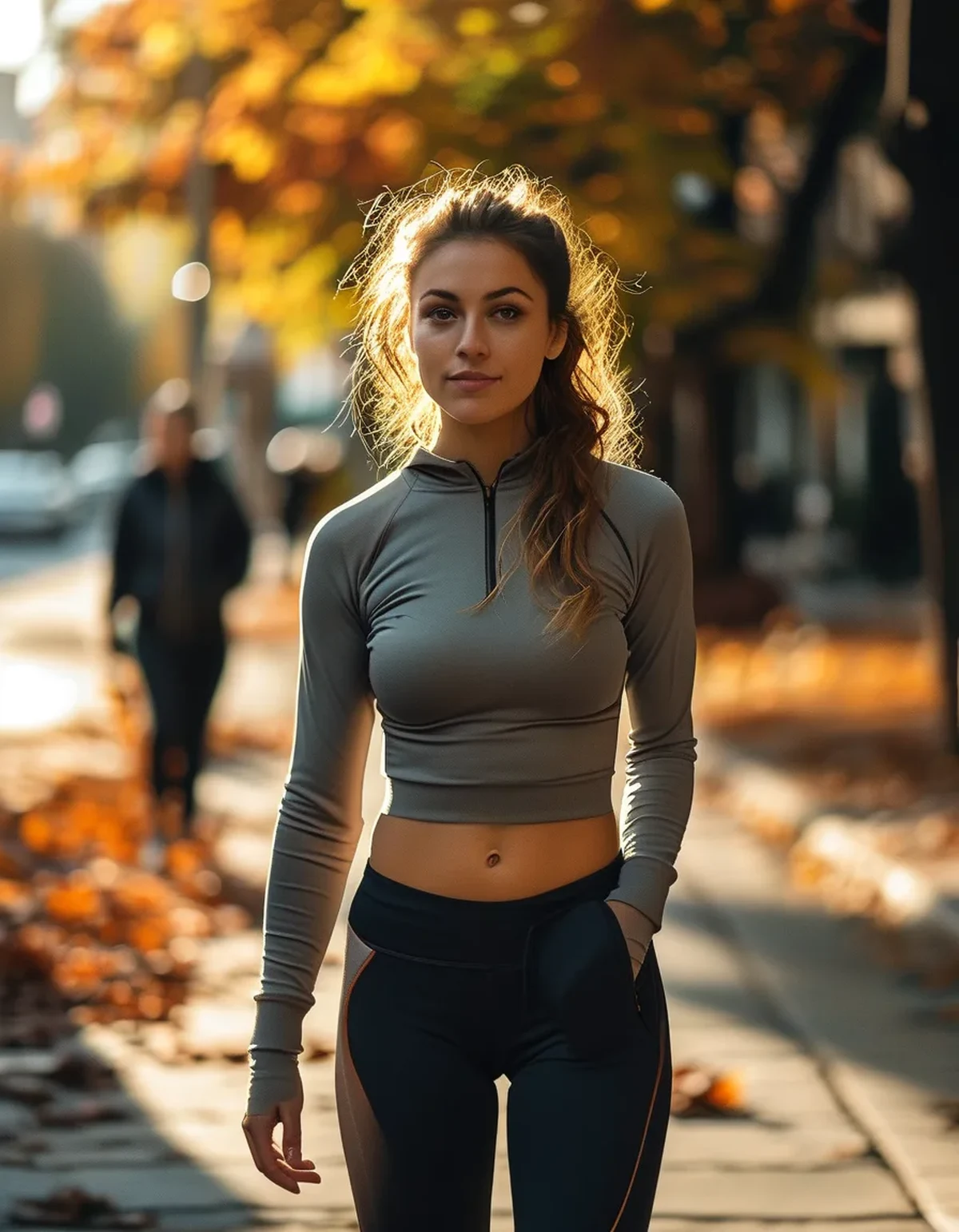
What should you check before buying?
Six checks, most of which you can do in a shop in thirty seconds.
Hold it up to the light. Thin fabric is instantly obvious and will cling, show through and bag. This one test filters most of the market.
Scrunch a section and release it. Fabric that springs back has recovery. Fabric that stays creased will look rumpled by lunchtime.
Check the weight in your hand. A set that feels insubstantial on the hanger will look insubstantial on you.
Look at the seams and the zip. Flat, even seams and a zip with a substantial pull are reliable indicators of overall construction quality, and both are cheap to inspect.
Check the waistband construction. A wide, structured waistband with a functional drawcord holds its shape. A thin elastic waistband in a light fabric distorts and rolls.
Verify the two pieces actually match. Sets sold as separates sometimes differ subtly in shade or fabric between top and bottom, particularly across different production runs. Check them side by side in daylight before buying, and buy both at the same time rather than adding the second piece later.
Myth vs Fact: Matching Sets
Myth: an expensive set is automatically better. Fact: price correlates loosely with fabric quality. Weight, recovery and finish are checkable directly, and mid-priced sets frequently outperform expensive thin ones.
Myth: oversized is the current look, so bigger is better. Fact: intentional oversizing is cut to be oversized, with the shoulder and rise engineered for it. Simply buying a larger size produces a shoulder seam halfway down the arm, which reads as ill-fitting rather than relaxed.
Myth: tracksuits are inherently casual. Fact: a heavy matte set in a deep colour with a structured coat and good shoes is a genuinely put-together outfit. Fabric and styling decide the register, not the category.
Myth: cotton is always better than synthetic. Fact: for this specific garment, a well-made synthetic or blend with good recovery holds its shape far better than pure cotton, which bags at the knee and seat by mid-afternoon.
Myth: you can fix a cheap set with styling. Fact: you can improve it. You cannot fix pilling, bagging or cling, all of which are fabric properties determined before you bought it.
Myth: the top and bottom just need to be the same colour. Fact: they need the same fabric and finish. Two pieces in the same colour but different surface texture look like a mismatch even when the shade is identical.
FAQ: Tracksuit and Matching Set Questions, Answered
What makes a set look expensive?
Fabric weight, a matte or lightly textured surface, and good recovery. Deep saturated colour helps considerably too.
How do I check quality in a shop?
Hold it to the light for thinness, scrunch and release for recovery, feel the weight, and inspect the seams and zip pull.
Should the fit be oversized?
Fit the shoulders and waist, and let the rest be relaxed. Buying a larger size to get an oversized look drops the shoulder seam down your arm.
What hem length works?
Breaking just at the shoe, or sitting cleanly above the ankle. Pooling fabric at the ankle is what makes a set look sloppy.
Is cotton or synthetic better?
For shape retention, a good blend with around 5 percent elastane outperforms pure cotton, which bags at the knees and seat.
How do I make it look deliberate rather than lazy?
Add one structured element — a good coat, a structured bag or leather trainers — and keep the palette tight.
Can I layer over a matching set in autumn?
Yes, with a structured coat. A second soft layer tips the whole outfit into loungewear.
TL;DR:
- Fabric weight, surface finish and recovery decide whether a set reads sharp or scruffy — not the cut.
- Matte or lightly textured beats high-sheen and brushed finishes every time.
- Fit the shoulders and waist; relaxed elsewhere is fine, oversized everywhere is not.
- No pooling at the ankle, and add one structured element to signal intent.
- Check in-store: hold to the light, scrunch and release, feel the weight.
Next time you try a set on, scrunch the sleeve in your fist and let go. If the crease stays, so will the scruffy look.
Keep Reading
This article is for general informational and styling purposes only. Fit, sizing, and product availability may vary.