The Fabric Weight Mistake That Makes Tracksuits Feel Wrong Half the Year
Quick Answer: A single mid-weight fleece tracksuit works for roughly half the year at best — the fabric weight mismatch, not the style, is why the same set that felt perfect in October feels stifling by June or too thin by January.
Most people buy one ‘go-to’ tracksuit and wonder why it stops feeling right a few months later. It’s rarely the fit — it’s the fabric weight for the season.
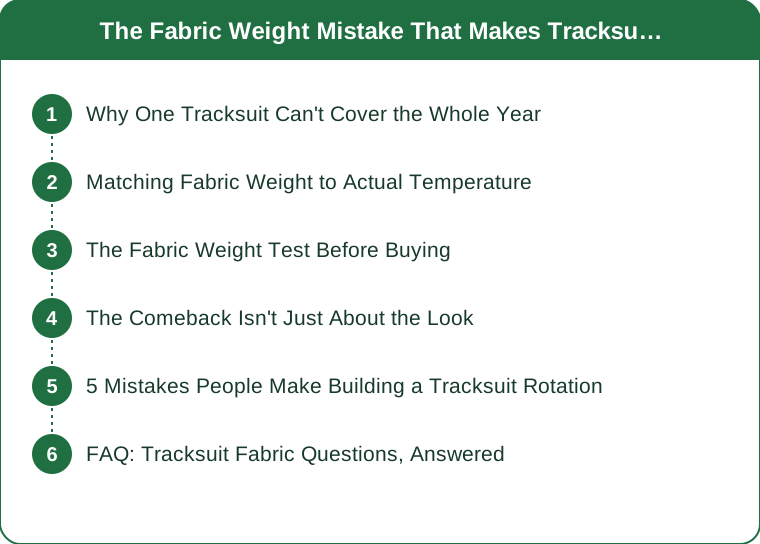
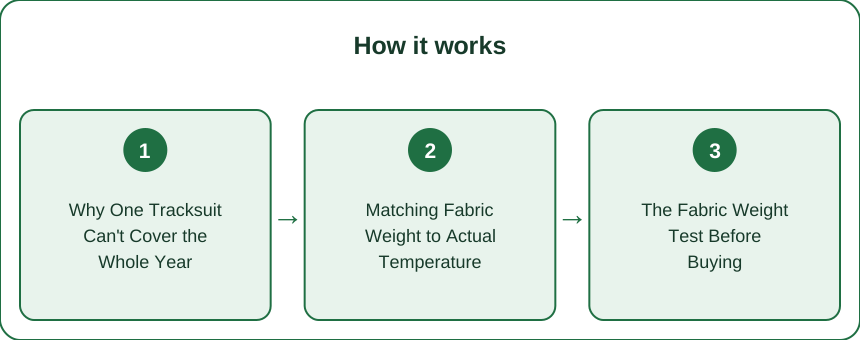
Why One Tracksuit Can’t Cover the Whole Year
Standard fleece-lined tracksuits, the most commonly sold weight, are built for roughly 45-65°F weather. Wearing the same fleece weight in summer heat or deep winter cold is the actual source of most tracksuit discomfort complaints, not the cut or style itself.
Matching Fabric Weight to Actual Temperature
Lightweight, unlined cotton-poly blends or French terry work best above 65°F, providing comfort without overheating. Mid-weight fleece suits 45-65°F. Below 45°F, look for brushed or heavier fleece-lined options, or layer a lightweight tracksuit under a coat rather than relying on one heavy set to do everything.
The Fabric Weight Test Before Buying
Check the fabric weight listed in grams per square meter (GSM) if available — under 250 GSM is lightweight, 250-350 GSM is mid-weight, and above 350 GSM is heavyweight. Most retailers list this in product details, and it’s a far more reliable indicator than touch alone in a warm store.

The Comeback Isn’t Just About the Look
Tracksuits are having a broader style moment, but the pieces that actually get worn repeatedly (rather than sitting unworn after one uncomfortable outing) are the ones matched correctly to the wearer’s actual climate and season, not just the trending silhouette.
5 Mistakes People Make Building a Tracksuit Rotation
1. Buying one ‘nice’ tracksuit and expecting it to work year-round. 2. Choosing based on color and cut alone without checking fabric weight. 3. Assuming all fleece is the same weight — brushed fleece varies significantly between brands. 4. Not considering how the set layers (or doesn’t) under a coat for colder months. 5. Storing summer-weight sets away from heavier ones, making it easy to grab the wrong one on a rushed morning.
FAQ: Tracksuit Fabric Questions, Answered
How many tracksuits do I actually need for year-round wear?
Two weights — one lightweight for warm months and one mid-to-heavyweight for cool months — covers most climates without needing a full four-season wardrobe.
Does color affect how warm a tracksuit feels?
Darker colors absorb more heat in direct sun, which matters slightly for outdoor wear but has minimal effect indoors or in mild weather.
Is French terry or fleece better for versatility?
French terry is generally more versatile across a wider temperature range because it’s lighter and more breathable than traditional brushed fleece.
TL;DR:
- One tracksuit fabric weight only comfortably covers about half the year
- Match GSM (fabric weight) to actual temperature range, not just style
- Lightweight for 65°F+, mid-weight for 45-65°F, heavier or layered below that
- Two weight options cover most climates without overbuying
The tracksuit comeback holds up best when the fabric weight actually matches the season — not just when the silhouette matches the trend.
Keep Reading
This article is for general informational and styling purposes only. Fit, sizing, and product availability may vary.